
On this page
Know the signs that can't wait
You aren't expected to diagnose anything. You're expected to notice when something is wrong and act fast. Treat these as go-now signs:
- Trouble breathing, or gums that look pale, blue or gray
- Collapse, or the pet can't stand
- A seizure
- Bleeding that doesn't stop with pressure
- Suspected poisoning: medicines, chemicals, toxic food or plants
- A swollen, tight belly with retching that brings nothing up
- Straining to pee with little or nothing coming out, especially in male cats
- Repeated vomiting or diarrhea
This isn't a complete list. If you're unsure, call the clinic and describe what you see. They can tell you over the phone whether to come in.
Set up the emergency file before the first visit
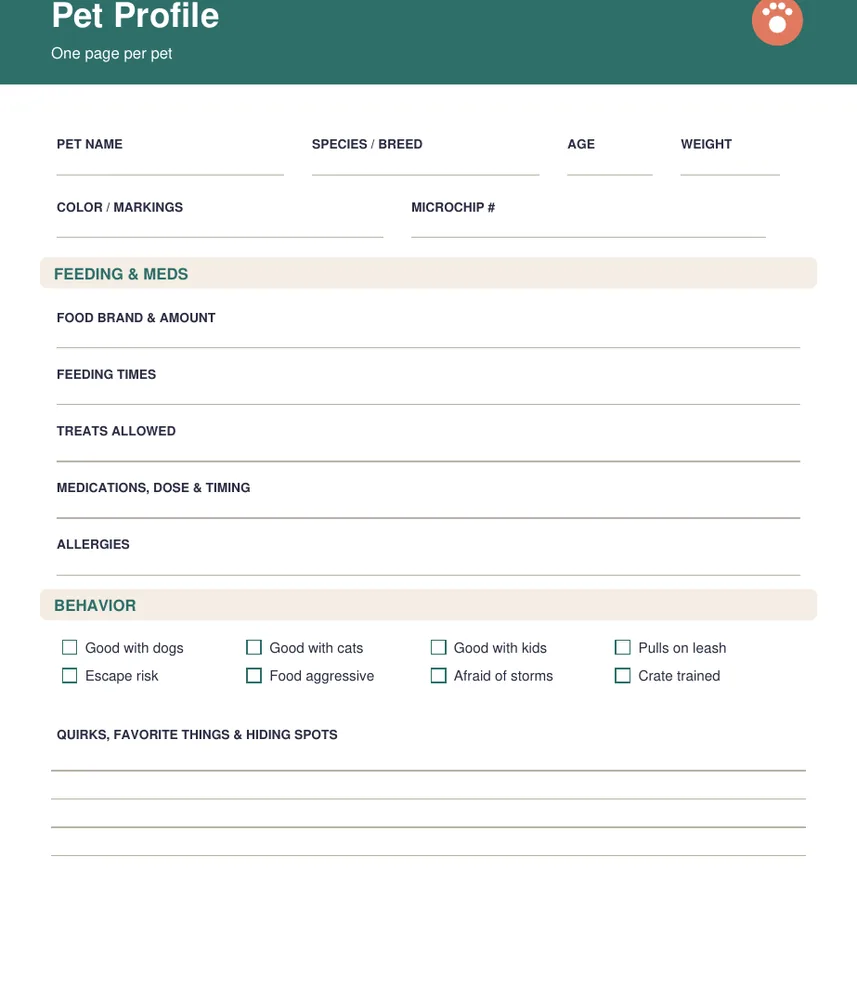
Most of the panic in an emergency comes from missing information. Collect this at the meet and greet, and keep it where you can reach it on your phone:
- People. Every number for the owner, plus a backup person who can make decisions and has a key.
- Vets. The pet's regular vet and the nearest 24-hour emergency clinic, with addresses. Not every clinic treats every species.
- Permission. Written vet authorization with a spending limit the owner approves, and how the bill gets paid.
- Health. Conditions, medications and anything the owner wants to decide personally, such as major surgery.
- Finding a lost pet. Microchip number and registry, a recent photo, and where the carrier and leash live.
Our meet and greet checklist has the full question list. The Client Onboarding Pack includes an emergency vet authorization form and a pet profile.
Step by step: a sick or injured pet
Keep yourself safe
A pet in pain may bite, even one that loves you. Move slowly and handle it as little as you can.
Call the clinic
Say what happened and that you're on your way, so they can get ready.
Message the owner and backup
At the same time, not after. A text with a photo is fine. Don't wait for an answer.
Move the pet safely
Use a carrier for cats and small dogs. Use a blanket, or a firm board for a large dog that can't walk.
Stay within the limit
Follow the authorization. If treatment will cost more than the agreed limit, ask the clinic for an estimate and keep calling.
Keep everyone updated
Send the owner short updates and keep every receipt and discharge note.
When the owner can't be reached
Owners travel through time zones and dead spots, so plan for silence:
- Try every channel. Call, text, email and any messaging app the owner listed, then the backup contact.
- Log each attempt. Note the time of every call and message.
- Call the pet's regular vet. They know the animal's history and can advise.
- If it's urgent, go. Don't let the payment question delay care for a pet in distress. Your authorization form covers this.
- Keep the thread going. Send updates as things happen, so the owner sees the whole story when they reconnect.
If a pet escapes
Escapes usually happen at the door: a cat slipping past your feet, or a dog backing out of a loose harness. Act straight away:
Search close by
Walk the nearby streets calling calmly. Cats that slip out often hide close to home, under decks, bushes and cars.
Tell the owner
Call the owner right away, even if you expect to find the pet in minutes.
Use what they know
Take treats, a favorite toy or a shaken food bag. Leave a familiar blanket by the door.
Spread the word
Ask neighbors, and post a photo in local groups and lost-pet pages.
Call shelters
Contact local shelters and animal control, and report the pet missing to its microchip registry.
Prevent the next one
Check doors and harnesses, and use a "one door closed before the next opens" habit.
Write it down while it's fresh
A written record protects the pet, the owner and you. It also helps the vet, and helps you answer the owner's questions later without guessing.
Example only
Incident record: drop-in visit
- 4:10 pm
- Found Biscuit vomiting, 3 times in 10 minutes
- 4:12 pm
- Called the emergency clinic, told them we were coming
- 4:13 pm
- Texted the owner and backup contact with a photo
- 4:40 pm
- Arrived at the clinic, gave them the pet profile
- 6:05 pm
- Owner called back, approved the estimate
- After
- Receipt and discharge notes saved to the client file
Note anything unusual on that day's visit report too, so the owner gets one consistent record.
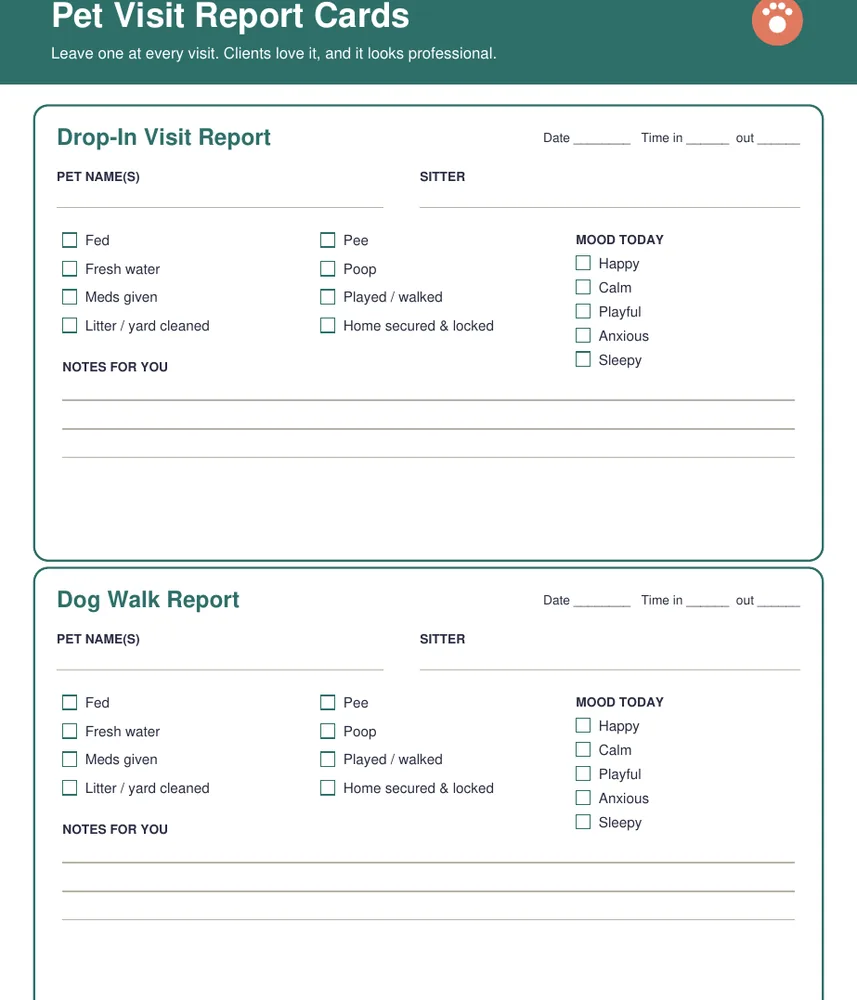
Free pet visit report cards
Drop-in, dog walk, overnight and cat visit report cards with a notes box, so every visit, including the unusual ones, is on paper.
Get it free on Gumroad Enter $0 at checkout.Afterwards: insurance and follow-up
Tell your insurer if your policy requires notice of incidents. Then check what was missing from the emergency file, and update it before the next booking.
Frequently asked questions
Who pays the vet bill if a pet gets sick while I'm pet sitting?
The owner is generally responsible for their own pet's veterinary care. Agree in your service agreement how an emergency bill gets paid: a card on file at the vet, the owner paying the clinic by phone, or you paying and being reimbursed. If an injury happens because of something you did, that's the kind of claim pet sitter insurance with care, custody and control coverage is meant for, so read your policy.
Can I take a client's pet to the vet without asking first?
Get written vet authorization with a spending limit at the meet and greet, so you already have permission. In a true emergency, go and keep trying the owner on the way. Some clinics may ask the owner for consent or payment before treatment beyond basic stabilizing, which is another reason to have the form signed and a copy with you.
Should I call the owner or the vet first?
In a real emergency, do both at once: call the clinic to say you're coming, and text the owner and their backup contact. Don't wait for a reply before you leave. For something that isn't urgent, call the owner first, then their regular vet if you can't reach them.
What should be in a pet sitter's first aid kit?
A simple kit: gauze, a self-stick bandage wrap, tape, blunt-tip scissors, tweezers, saline, disposable gloves, a towel or blanket, a spare slip leash, and a card with the emergency numbers for each client's area. Don't give a pet any human medicine unless a vet tells you to.
Do I need to tell my insurance company about an incident?
Read your policy, because many require prompt notice of anything that could lead to a claim, even before anyone asks you to pay. Keep your written incident record, receipts and messages together so you can send them if needed.
Going further
The Medication Log, Incident Report & Emergency Plan Kit (fillable PDF) puts this page on paper: owner medication instructions and a dose log, an incident report for injuries, bites, escapes and illness, an emergency plan, a lost pet plan and a first aid kit checklist.
Disclosure: the templates linked here are made and sold by this site's shop. This page is general information, not veterinary, legal or insurance advice. In an emergency, follow the advice of a veterinarian.